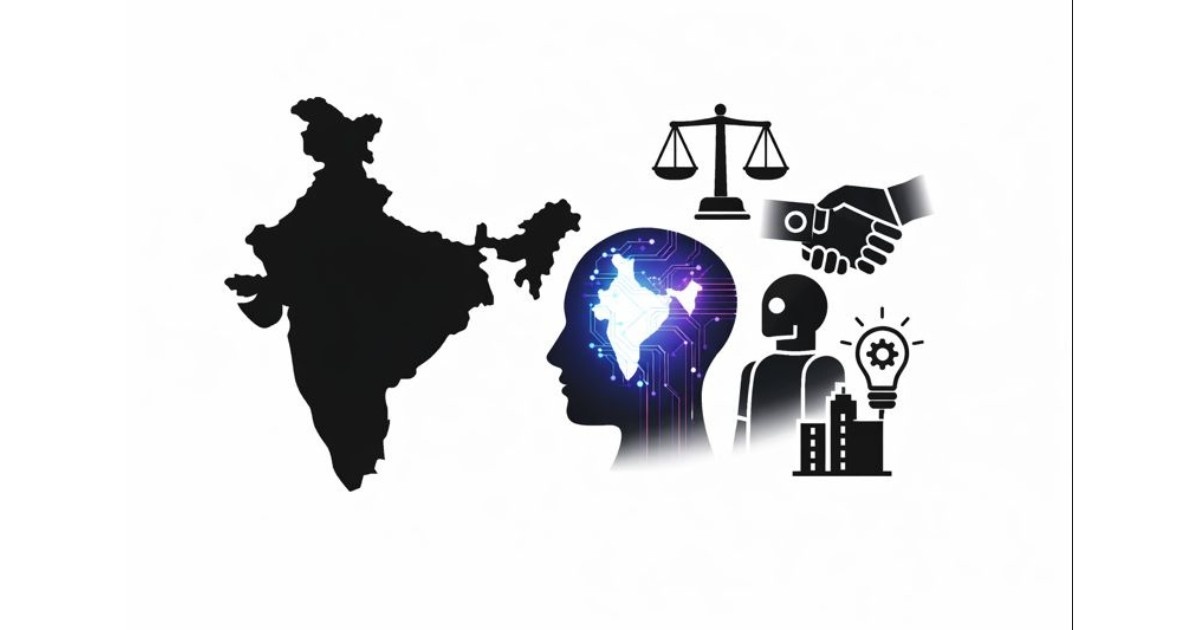
AI Revolution in India gathers pace with major innovations, ethical debates, and startup breakthroughs transforming sectors like healthcare, fintech, education, and governance.
The AI Revolution in India is accelerating at an unprecedented pace. From healthcare diagnostics and fintech automation to education tools and public governance systems, artificial intelligence is becoming central to India’s digital transformation. Policymakers, startups, global technology firms, and academic institutions are all playing critical roles in shaping the AI Revolution in India.
Rising internet penetration, affordable data, and a thriving startup ecosystem have created fertile ground for AI-led innovation. At the same time, ethical debates around data privacy, algorithm bias, and job displacement are intensifying. The AI Revolution in India is therefore not just about technology. It is about responsibility, opportunity, and long-term economic growth.
Below are seven powerful shifts defining the AI Revolution in India today.
1. AI Innovation Expands Across Core Industries
One of the strongest drivers of the AI Revolution in India is sector-wide adoption. Indian companies are integrating AI into banking risk models, supply chain systems, and predictive healthcare tools.
Major technology players such as Infosys and Tata Consultancy Services are investing heavily in AI research and enterprise solutions. These firms are building AI platforms for global clients while also supporting domestic digital growth.
Healthcare providers are using AI to analyze medical scans and improve early disease detection. Retail firms are applying AI to understand customer behavior patterns. Manufacturing companies are using predictive maintenance systems to reduce downtime. These practical applications show how deeply the AI Revolution in India is embedded in everyday business operations.
2. Government Push Strengthens the AI Revolution in India
The AI Revolution in India is also being driven by policy support. National and state governments are promoting AI through research grants, innovation hubs, and digital infrastructure projects.
Public sector applications include AI-powered grievance systems, smart traffic management, and language translation tools for governance platforms. Policymakers see artificial intelligence as a way to improve efficiency and transparency.
Educational institutions are adding AI-focused programs to prepare students for future jobs. This coordinated approach between industry and government is accelerating the AI Revolution in India and building long-term capacity.
3. Startup Breakthroughs Reshape the AI Landscape
Startups are central to the AI Revolution in India. Young companies are building AI tools for agriculture, climate analysis, fintech fraud detection, and personalized education.
In cities like Bengaluru, Hyderabad, and Pune, AI startups are attracting global venture capital. Investors view India as a scalable AI innovation hub due to its engineering talent and cost advantage.
Some startups are focusing on generative AI models tailored to Indian languages. Others are developing voice assistants and chatbots designed for regional markets. These breakthroughs are expanding the scope of the AI Revolution in India beyond urban tech centers.
4. Generative AI Sparks New Momentum
Generative AI tools are adding fresh energy to the AI Revolution in India. Businesses are using AI models for content creation, coding assistance, marketing automation, and customer engagement.
Global platforms like OpenAI have influenced Indian enterprises to experiment with AI-based productivity tools. Local developers are building region-specific AI applications that understand Indian languages and dialects.
The rapid adoption of generative AI highlights both opportunity and risk. Companies are gaining efficiency, but concerns about misinformation and intellectual property are also rising. This balance defines the evolving AI Revolution in India.
5. Ethical Debates Surround the AI Revolution in India
As the AI Revolution in India expands, ethical concerns are becoming more visible. Data privacy remains a major issue. AI systems rely on large datasets, and questions arise about how data is collected and stored.
Algorithm bias is another challenge. If AI models are trained on limited or unbalanced data, outcomes may be unfair. Experts emphasize transparency and accountability to maintain trust in AI systems.
There is also concern about job displacement. Automation may reduce certain manual or repetitive roles. However, many analysts argue that the AI Revolution in India will create new roles in data science, AI training, and digital services.
Balancing innovation with responsibility is essential for sustainable growth.
6. Education and Skill Development Accelerate
The AI Revolution in India is reshaping education and skill development. Universities and private institutes are launching AI certification programs. Online platforms offer courses in machine learning, data analytics, and AI ethics.
Students are increasingly choosing AI-related careers due to strong salary prospects and global demand. Corporate training programs are also upgrading employee skills.
This focus on learning ensures that the AI Revolution in India is supported by a skilled workforce ready to adapt to new technologies.
7. Global Recognition and Strategic Positioning
India’s growing AI capabilities are attracting international attention. Global technology firms are expanding AI research centers in Indian cities. Cross-border collaborations are increasing.
India’s multilingual population offers a unique testing ground for AI language models. This diversity gives the AI Revolution in India a strategic advantage in developing inclusive technology.
At global forums, India is positioning itself as both an innovation hub and a voice for ethical AI governance. This dual approach strengthens its standing in the global digital economy.
Economic Impact of the AI Revolution in India
The AI Revolution in India is expected to contribute significantly to economic growth. Automation can improve productivity across sectors. AI-driven analytics can enhance decision-making and reduce waste.
Startups powered by AI are creating employment opportunities and attracting foreign investment. Digital exports are also likely to expand as Indian firms deliver AI solutions to international markets.
Economists believe the AI Revolution in India could become a major growth engine over the next decade.
Challenges Ahead for the AI Revolution in India
Despite strong momentum, challenges remain. Infrastructure gaps in rural areas can limit AI adoption. Regulatory clarity is still evolving.
Small businesses may struggle to integrate advanced AI tools due to cost constraints. Bridging this digital divide is critical for inclusive growth.
Addressing these issues will determine how evenly the benefits of the AI Revolution in India are distributed.
Conclusion: The Road Ahead
The AI Revolution in India is entering a decisive phase. Innovation is expanding rapidly. Startups are breaking new ground. Policymakers are building supportive frameworks. Ethical debates are shaping responsible adoption.
Artificial intelligence is no longer a future concept in India. It is part of everyday operations in finance, healthcare, education, and governance.
If managed carefully, the AI Revolution in India can transform industries, empower entrepreneurs, and strengthen India’s global digital leadership. The coming years will reveal how effectively innovation and ethics can move forward together in shaping India’s AI-driven future.
Also Read: 7 Powerful Reasons the Viral India Travel Story Is Winning Global Hearts
Follow us on google news: Click Here